Educational resource only. Nothing here is medical advice or a promise of results — please speak with a qualified clinician about your own health.

Pelvic Strength Guide Pelvic Strength Guide
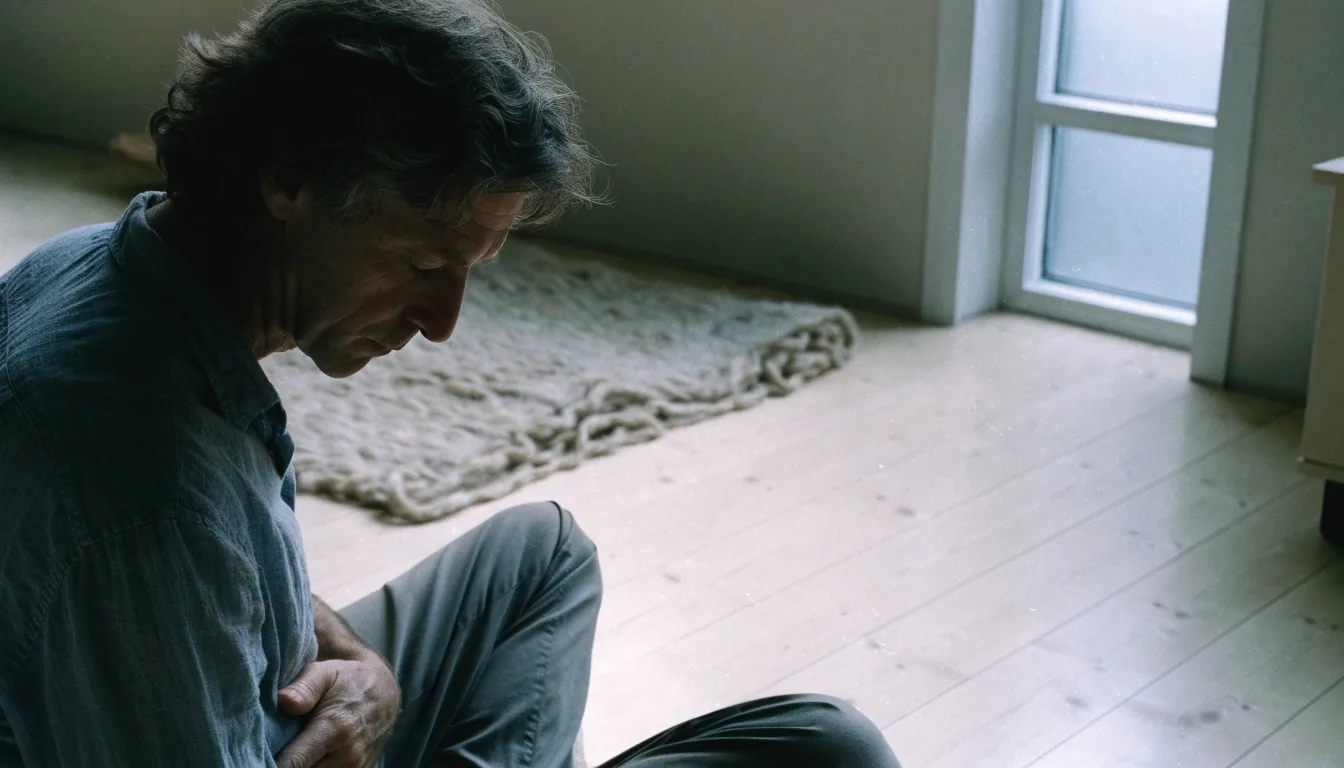
A man seated at rest on a pale birch floor beside an unrolled wool mat in a quiet room

Muscle engagement · posture · breathing

How to Engage the Pelvic Floor Correctly

Most beginner trouble with Kegel exercises comes down to technique rather than effort. This page walks through how to locate the muscles, how to release them fully, and how posture and breathing change the quality of each contraction.

Before you squeeze anything, learn to feel the muscle

The pelvic floor sits inside the body, so you cannot watch it work. You rely on sensation instead. That is why the first stage of training is about awareness rather than strength — the mind-muscle connection that lets you tell a real contraction apart from a general clench. Once you can reliably feel the muscles tighten and release, the rest of the practice becomes much easier to build.

This is educational guidance, not a personal assessment. Work at a pace you can observe, and stop for the day when the sensation fades.
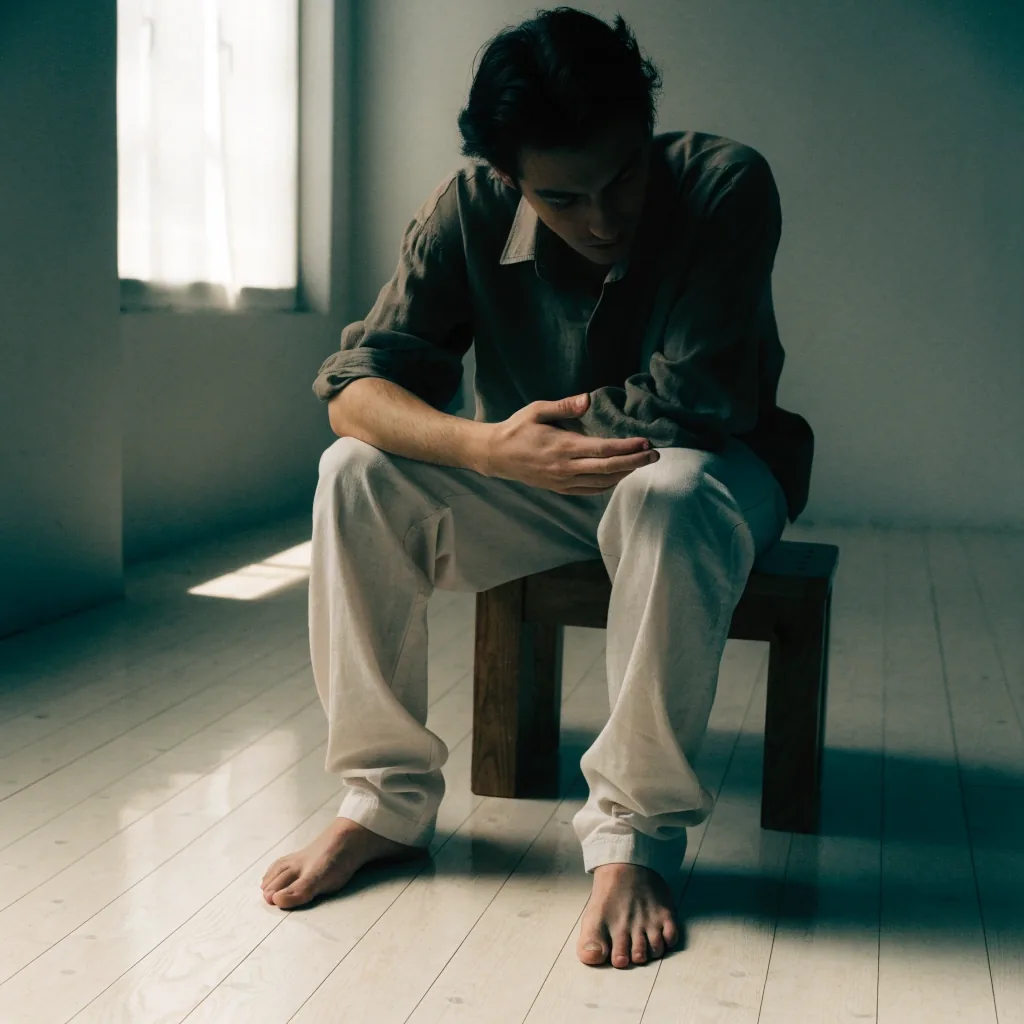
A man sitting tall with one hand resting on his lower abdomen while practising a contraction

Sitting tall gives the muscles room to move · feet flat · one slow breath before you begin
A reliable way to find the muscles

Tighten the ring of muscle around the back passage as if you were trying to stop yourself passing wind. This cue appears in male pelvic floor guidance from Cambridge University Hospitals and is one of the clearest descriptions available. You should feel a small inward lift rather than a hard squeeze.

A second cue, common in self-care guides, is imagining that you are stopping the flow of urine. Use it once or twice to confirm the area you are feeling, then leave it alone. It is for identification only and should not be practised during urination.

What you should feel

  • A small inward lift at the base of the pelvis, felt inside rather than at the surface.
  • A gentle closing and lifting, roughly the effort of holding a slow breath out.
  • A clean release afterwards, where the muscle softens back down and stays soft.
Hold — 3 to 5 seconds Release — at least as long as the hold Repeat — 8 to 10 times, once or twice a day
An empty pale room with doorway light spilling across the floor and a rolled wool mat at the wall

Relaxation matters as much as the squeeze

A contraction is only half the exercise. The release lets the muscle return to its resting length. Try a slow exhale and let the muscles soften downward.

What you should not feel

If the wrong muscles join in, you are recruiting larger groups to do the work. That is common at the beginning, and it usually fades once you slow down and pay attention to the sensation in the pelvic area itself.

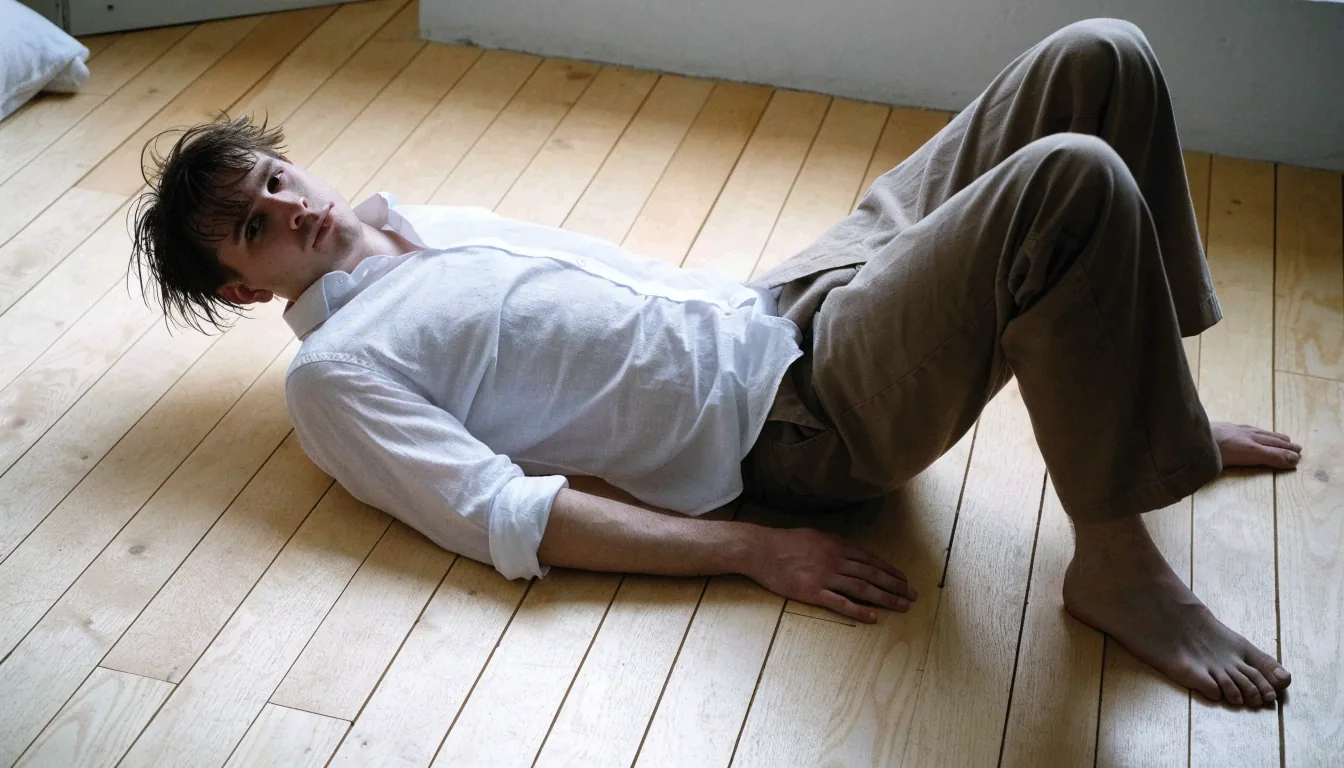
A man lying with knees bent, one hand on his buttock to check whether it tightens

Buttocks stay soft

Clenching the buttocks is the most frequent error. It feels like effort, so beginners assume it is working. In practice, it shifts the work away from the pelvic floor.

Thighs stay quiet

Gripping the thighs is the same mistake in another place. If your legs brace, the contraction you are feeling is not coming from where you want it.

The breath keeps moving

Holding your breath raises pressure inside the abdomen, which pushes down just as you are trying to lift. Count out loud so you can hear whether you are still breathing.

The stomach stays easy

Pulling the belly in sharply hides the movement you are trying to learn. A gentle lower-abdominal engagement is fine; a hard hollow is not.

Posture changes what you can feel

Slouching in a chair shortens the front of the body and makes it harder to feel the pelvic floor engage. Small postural changes make a noticeable difference to how clearly you can feel the contraction.

Sitting

Sit tall, feet flat

Let the pelvis sit upright on the chair with both feet on the floor and the knees roughly level with the hips. That gives the muscles room to move instead of being compressed against the seat.

Standing

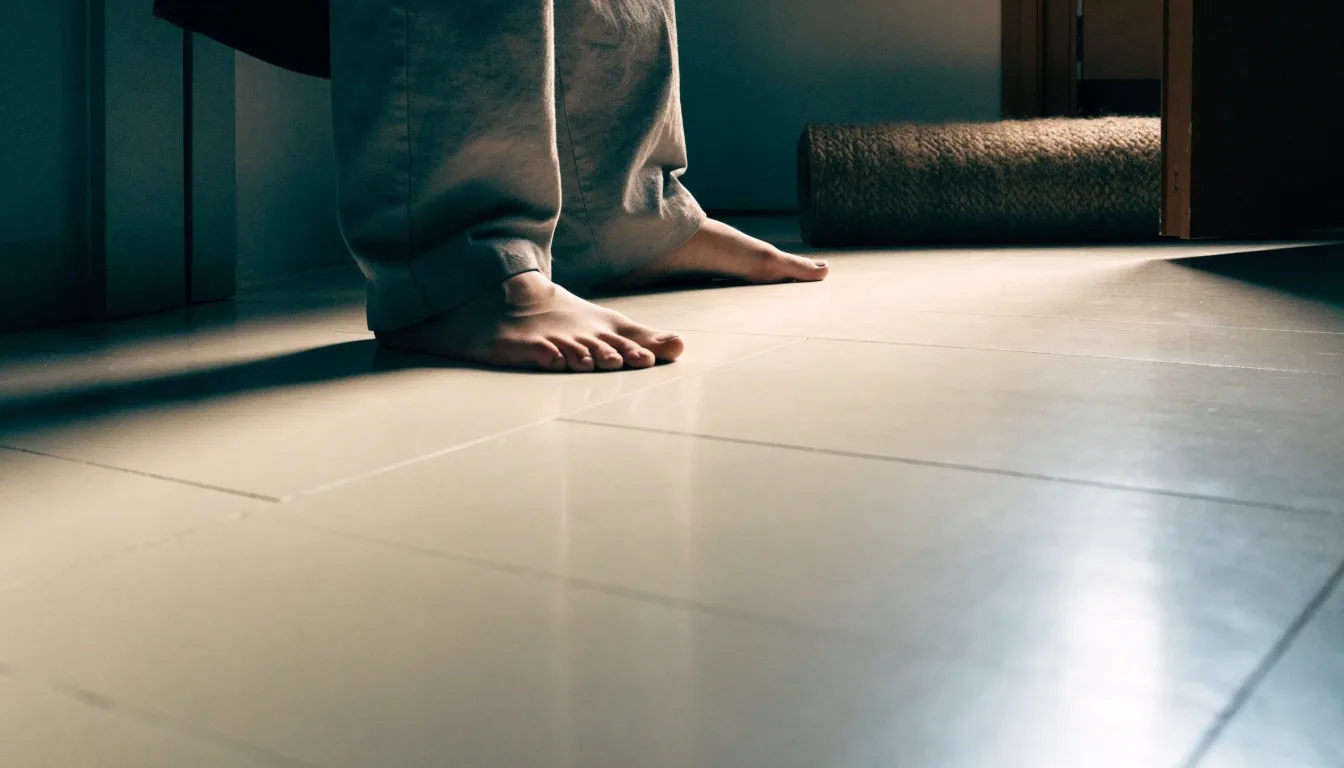
Even weight, soft knees

Keep your weight spread across both feet and avoid locking the knees. A locked stance stiffens the hips and makes the inward lift harder to notice.

Breathing in

The muscle descends

On the inhale, the pelvic floor tends to drop slightly as the ribcage widens. That is the natural rhythm, not a loss of tone.

Breathing out

Squeeze on the exhale

Exhale gently as you squeeze. The breath and the lift then travel in the same direction instead of working against each other.

Core stability and the deep abdominals

The pelvic floor works with the deep abdominal muscles and the muscles along the spine. Together they form a support system for the lower torso. You do not need to train them all at once, but it helps to know they are connected.

A gentle engagement of the lower abdomen, without pulling the belly in hard, often makes the pelvic floor contraction feel more coordinated. Think of the lower abdomen as a light supporting hand rather than a belt being tightened.

A short session, written as a schedule

Settle and breathe 4 slow breaths
Find the lift 2 light contractions
Working set 8 to 10 × 3 to 5 s hold
Release and check 1 minute, hands still

Figures are a working starting point, not a target to beat. If the last repetitions feel vague, the session has done its job — stop there and let the muscle rest until tomorrow.

Three mistakes worth catching early

Each of these shows up in the first weeks. None of them are dramatic, which is exactly why they are easy to keep doing.

Squeezing the wrong muscles

Clenching the buttocks feels like effort, so it is easy to accept as progress. It is not the pelvic floor doing the work. The same applies to gripping the thighs or pulling the stomach in sharply. If you are unsure, lie down and place one hand on your buttock to check whether it is tightening. It should stay relaxed through the whole repetition.

Holding the breath

Holding your breath during a contraction is easy to do without noticing. The fix is simple: count out loud, or exhale audibly, so you can hear whether you are breathing. Once you notice the habit, it usually disappears within a few sessions. If you catch yourself bracing, stop, breathe out slowly, and begin again from a settled position.

Practising while urinating

Stopping the flow of urine mid-stream is a common way to identify the muscles, but it should not become a training method. Doing it regularly can interfere with normal bladder emptying. Use the cue once or twice to confirm you have found the right area, then practise at other times, such as lying down or sitting in a chair.

A man standing upright with even weight across both feet, seen from behind in a pale room

Practising in different positions

Once you can engage the muscles lying down, try sitting, then standing. Each position changes the demand on your posture and balance, which affects how the contraction feels.

Standing contractions are useful because they resemble the way the muscles work during daily activity. Move to a new position only when the current one feels reliable — if the sensation disappears when you stand, go back to sitting for a few more sessions rather than pushing through.

Quick check before you finish

At the end of a session, take one slow breath and feel whether the pelvic floor is relaxed. If it still feels tight, spend another minute breathing gently and letting go. This small habit prevents the buildup of tension that sometimes follows enthusiastic practice, and it gives you a clear sense of where the muscles are at the end of each session.

Common questions about technique

Short answers to the things beginners ask most often. More questions are answered on the dedicated page.

See common questions
How can I tell if I am squeezing my buttocks instead of the pelvic floor?

Place a hand on one buttock during the contraction. If it tightens, you are recruiting the wrong muscle. Lying down with knees bent makes this easier to check, and it is worth repeating for a few sessions until the correct sensation feels familiar.

Is it normal to lose the sensation after a few repetitions?

Yes, especially at the beginning. The muscles tire and the sensation fades. Stop for the day and try again tomorrow rather than pushing through, because repetitions performed without sensation teach very little.

Can posture really change how well the exercise works?

Posture changes the space the muscles have to move in. Sitting tall and breathing steadily usually makes the contraction easier to feel and control, while a slumped position compresses the pelvis and blurs the feedback you are relying on.

How long before the movement feels natural?

It varies. Some people feel more confident within a couple of weeks of regular practice. Others take longer, and there is no fixed timeline. What matters is that you can feel the lift and the release clearly, not how quickly you arrive.

Where to go next

Technique is the part you can check yourself. The pages below carry the practice, the daily context, and the questions that come up once you have been doing this for a while.

Pelvic Strength Guide · Jl. Jenderal Sudirman No. 52, Jakarta Pusat, DKI Jakarta 10220, Indonesia · +62 21 316 3438 · [email protected]