
Daily habits · Jakarta editorial desk
Everyday Habits That Support Pelvic Floor Practice
Movement breaks, hydration, posture, sleep rhythm and calm breathing — the quiet scaffolding that makes regular practice easier to keep.
Why habits hold where willpower slips
Relying on motivation to do your exercises works for a week, then fades. Habits survive busy periods because they do not depend on how you feel that morning. The useful move is to attach the new practice to something you already do reliably — a morning shower, an evening meal, the walk to the car.
Once that link is formed, starting takes far less mental effort. You are not deciding whether to practise; you are simply doing the next thing in a sequence that already runs.
How a habit gets built
- Pick one anchor you already do daily — shower, meal, commute.
- Attach two minutes of practice directly after it.
- Keep the anchor, not the timer — the cue is what carries you.
- Review after two weeks; move the anchor if it keeps getting skipped.
Movement breaks during long sitting
Sitting for hours at a desk or in Jakarta traffic leaves the pelvic floor compressed and the hips stiff. Standing up every hour, even for a minute, restores some circulation and lets the muscles return to a neutral position.
A short walk to refill a water bottle counts. The point is not exercise, it is interruption — and regular breaks make it easier to notice how your body actually feels during the day.
Practical target
Stand once an hour
Most desk workers manage this without disrupting their day. There is no fixed number — the interruption matters more than the duration.
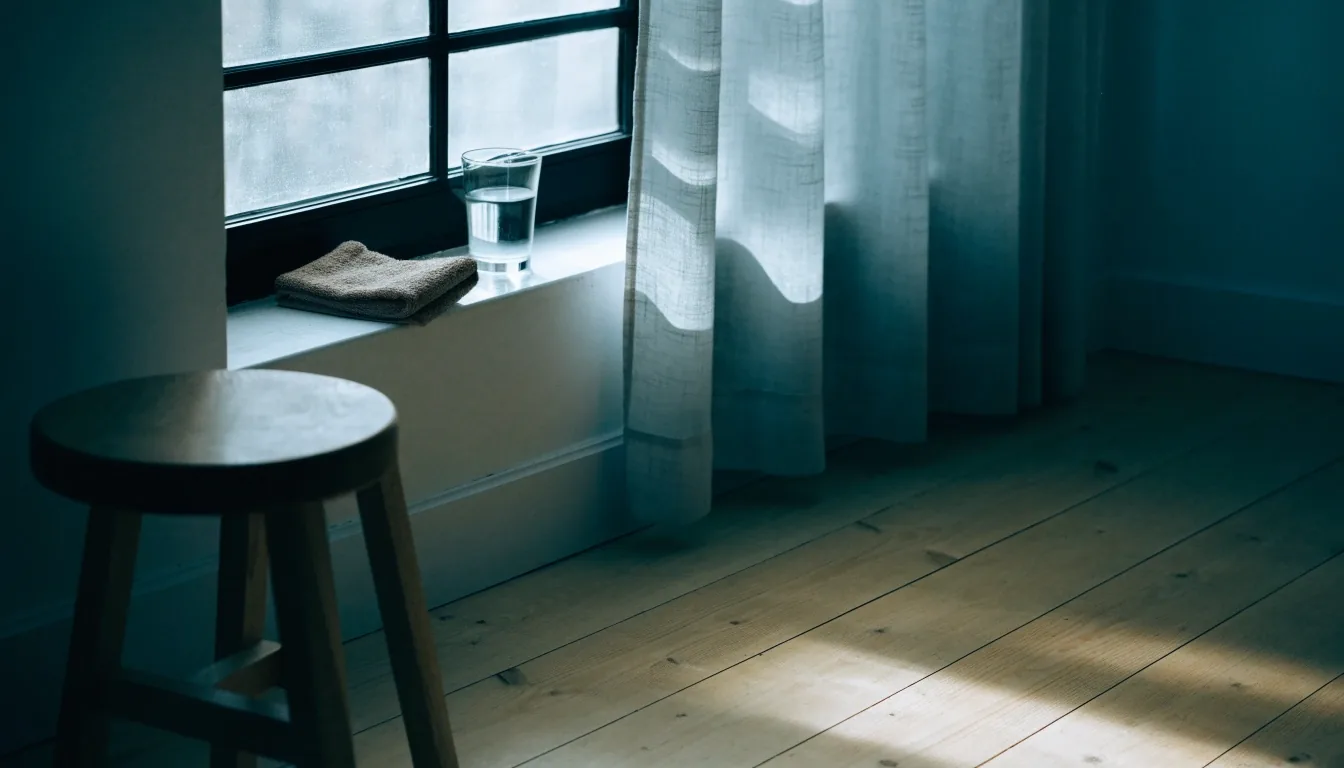
A quiet reference
The room where practice happens is usually the same room you sleep, work and rest in. Habits work because the space does not change.
Hydration without overthinking
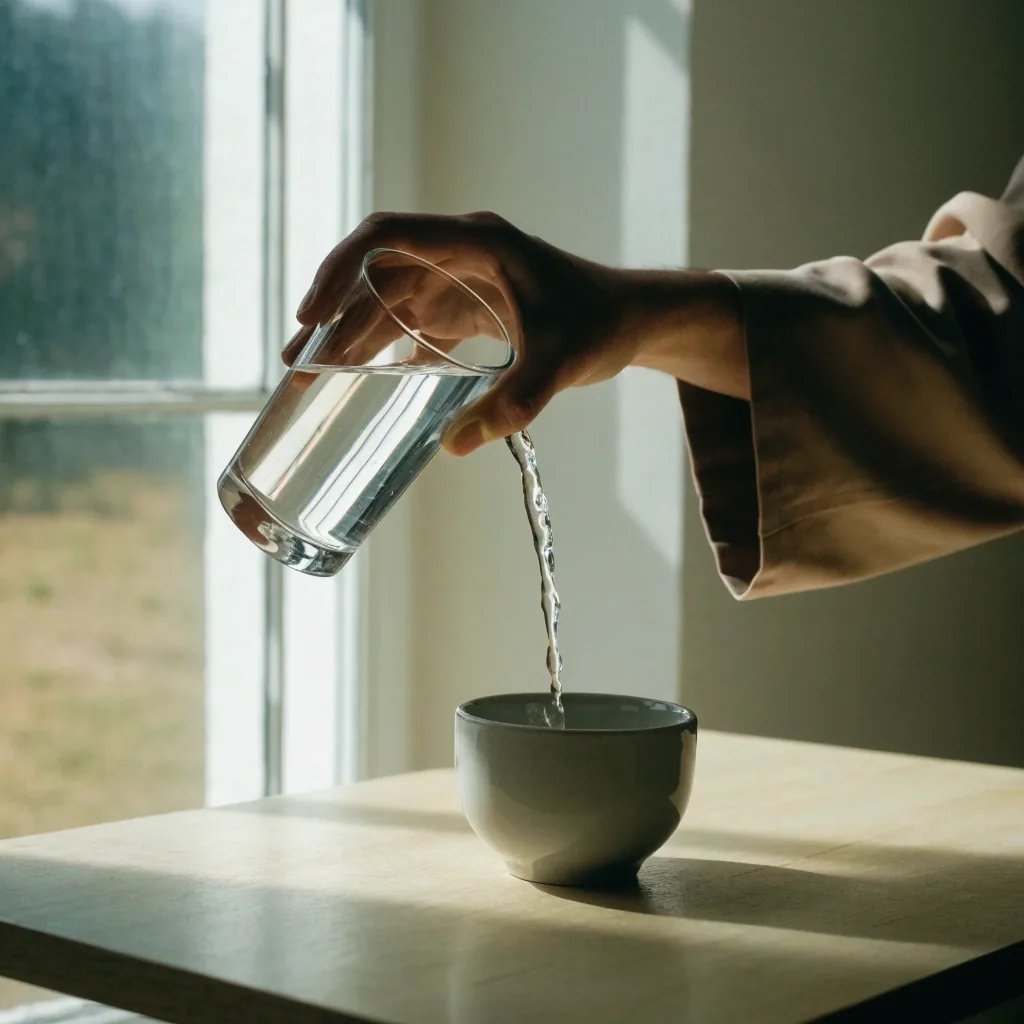
Drinking enough water through the day supports normal bladder function and keeps you alert. The exact amount varies with climate and activity, and in a hot, humid place like Indonesia it is easy to run low without noticing.
Keep a bottle within reach and sip steadily rather than in large bursts. If you are unsure what is right for you, that is a reasonable question to raise with a qualified professional.
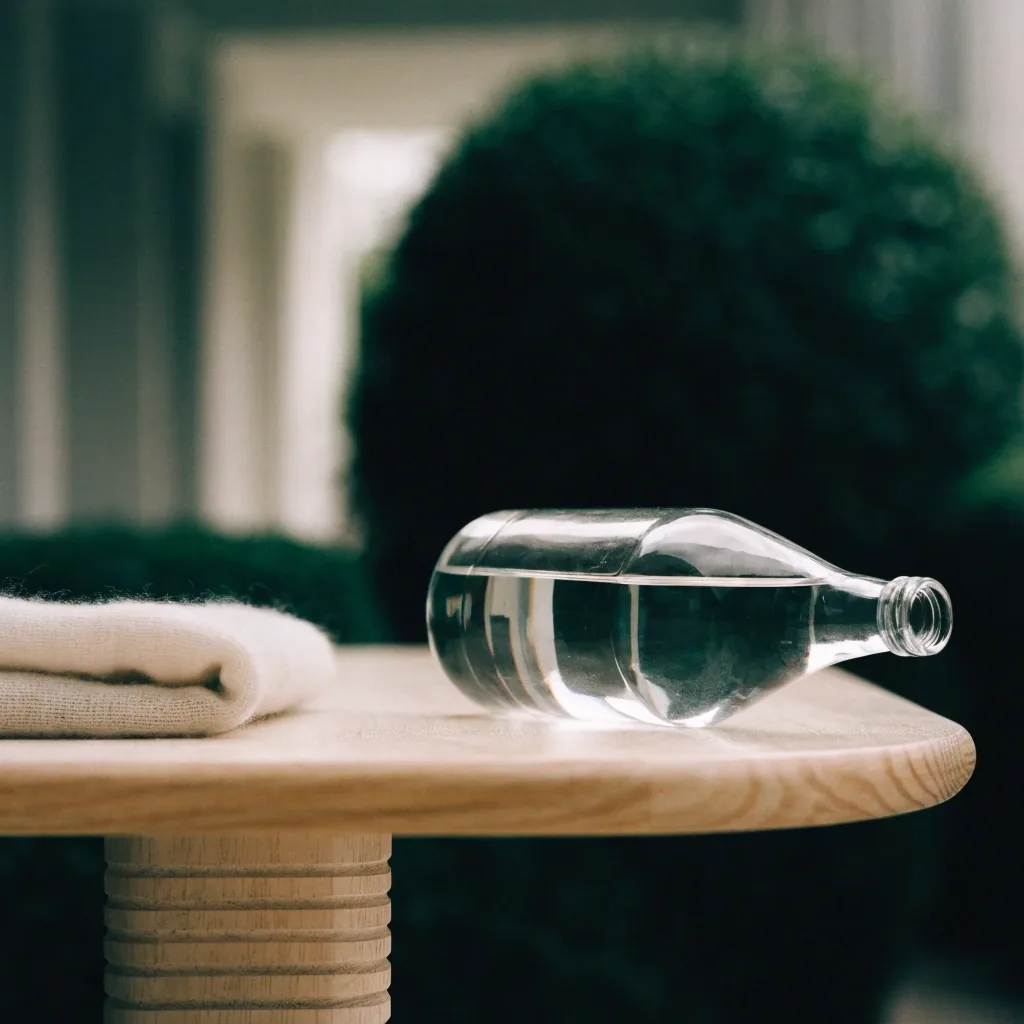
Steady, not sudden
Sipping across the day suits a hot climate better than large bursts at the end of it.
Posture at a desk or in a car
Slumping forward closes the front of the body and makes the pelvic floor harder to engage. Sitting tall with feet flat and the screen at eye level is a small change with a noticeable effect.
In a car, adjust the seat so your back is supported and your knees sit roughly level with your hips. Good posture during the day makes the exercises feel more natural when you do practise.
At the desk
- Feet flat on the floor, not hooked on the chair base.
- Screen at eye level so the chin stays level.
- Ribs stacked over the hips rather than pushed forward.
In the car
- Backrest angled so the spine is supported.
- Knees roughly level with the hips.
- Both hands on the wheel encourage an open chest.
Sleep rhythm and recovery
A rested body responds better than a tired one
Muscles recover during sleep, and a consistent bedtime helps your body settle into a predictable pattern. You do not need a perfect schedule. Aim for roughly the same sleep and wake times on most days, and keep the room dark and cool where you can.
If you are training the pelvic floor, a rested body is simply easier to work with than a tired one. The same applies to the habits around it — posture, hydration and breathing all get harder when you are short on sleep.
Breathing practice for relaxation
A few minutes of slow breathing each day helps you notice tension before it becomes a habit. Sit comfortably, breathe in through your nose for a count of four, and out for a count of six. Let the pelvic floor soften on each exhale.
This is not a formal exercise session, and it does not need to be perfect. It is simply a way to check in with your body between other tasks.
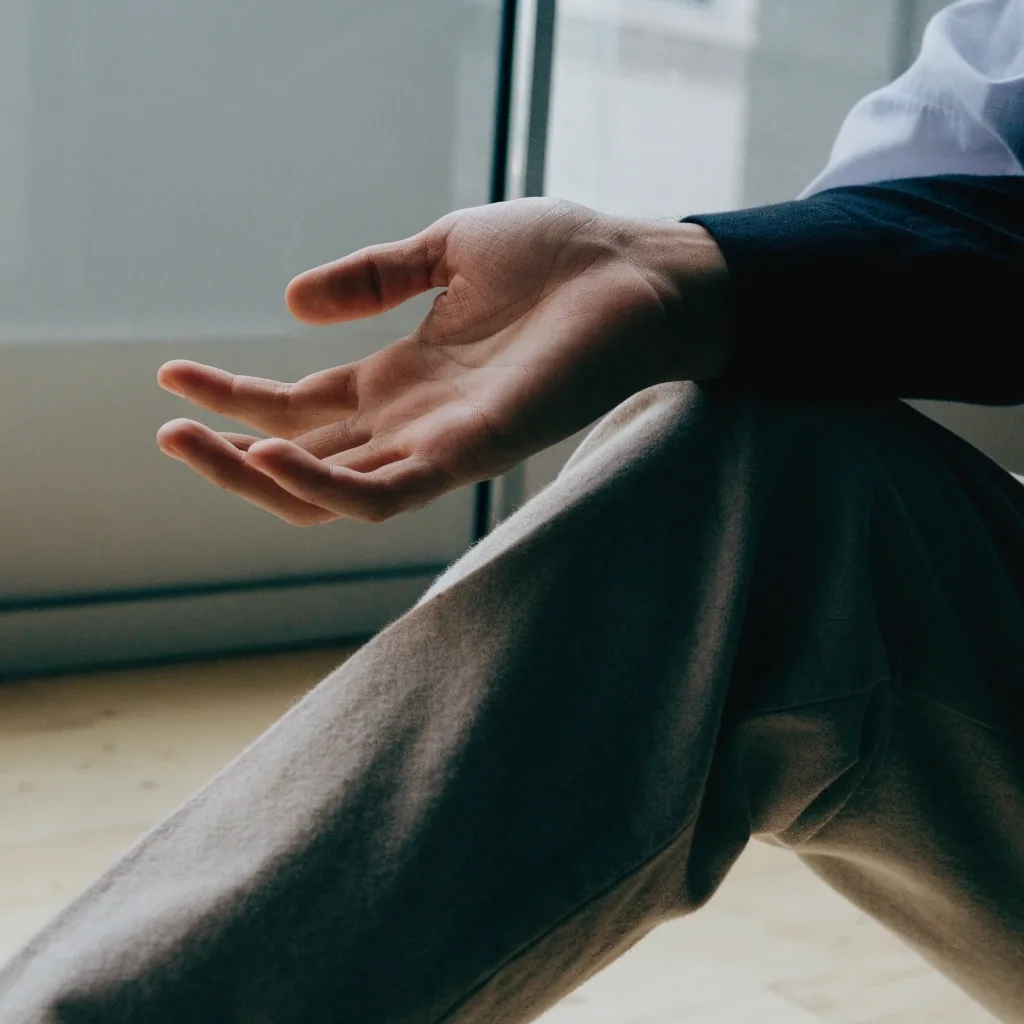
One round
Sit comfortably. Let the shoulders drop. Follow the count below and repeat for a minute or two, then return to what you were doing.
Stress and muscle tension
The muscles grip before you notice
Stress shows up in the body as tension, and the pelvic floor is no exception. When you are anxious or rushing, the muscles often tighten without you noticing. A short breathing pause can interrupt that pattern.
Over time, learning to notice and release tension becomes part of your pelvic floor practice, even though it looks nothing like an exercise. It is one more habit that supports the others.
Movement you actually enjoy
Walking, cycling, swimming, or a weekly game with friends all count. The best activity is one you will repeat — routine physical activity matters more than intensity for most people. Pick something that fits your week and does not require a special trip.
Public health frameworks such as Exercise is Medicine make the same point: a routine you can hold matters more than a hard session you dread. The habits on this page are built to sit alongside whatever movement already fits your life.
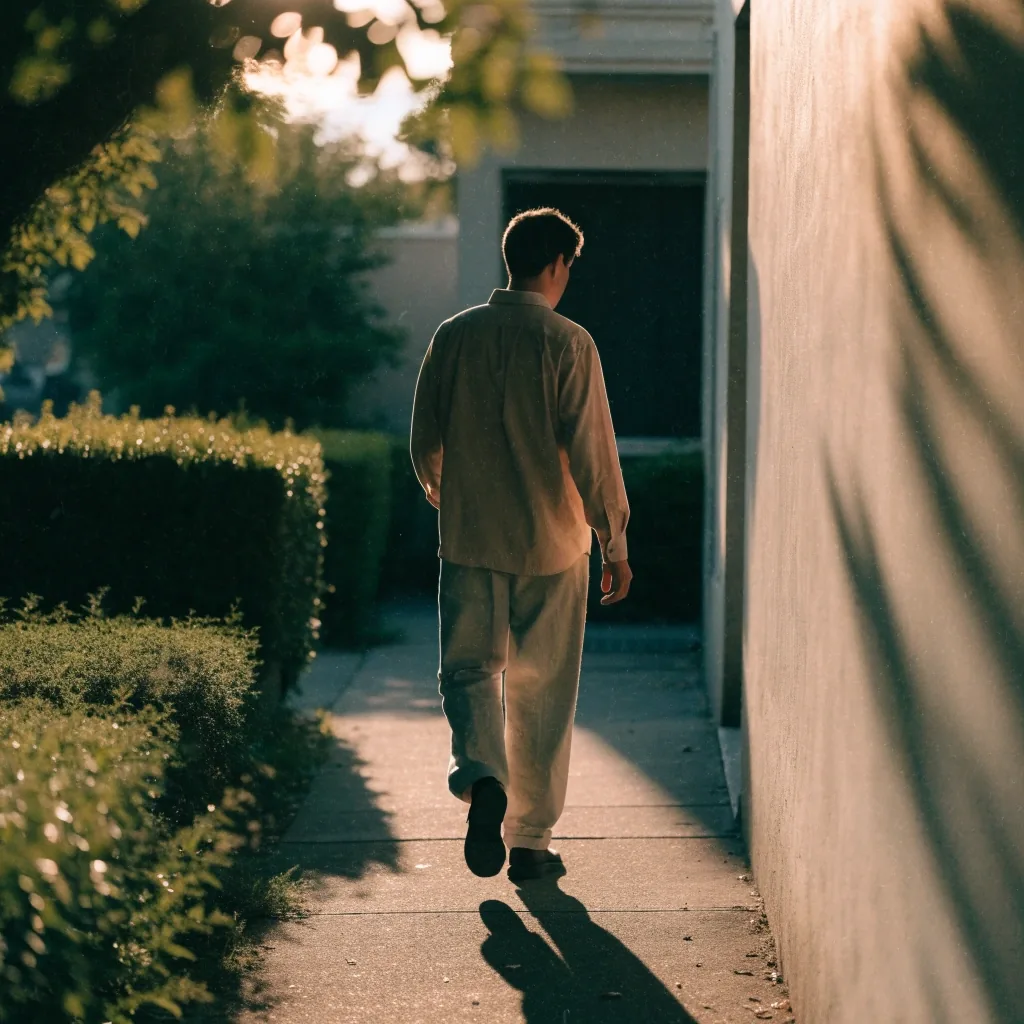
Fitting practice into family and work life
In many Indonesian households, mornings are busy and evenings belong to family. Trying to carve out a perfect twenty-minute window often fails. Instead, look for small gaps that already exist in your day.
The routine builder can help you pick reminder days that match your actual schedule rather than an ideal one.
Build a weekly planGaps that already exist
Tracking habits lightly
A simple note on your phone or a mark on a calendar is enough to see whether you are practising. Detailed tracking can become its own chore. What matters is spotting patterns: if you keep skipping evening sessions, try mornings instead. Adjust the plan rather than abandoning it.
When a habit slips
Everyone misses days. The useful response is to restart at the next opportunity rather than wait for a fresh week or month. Missing one session does not undo previous practice, and there is no penalty to catch up on. Treat the routine as something you return to, not something you complete.
Keeping the whole picture in view
Pelvic floor training is one part of looking after yourself. Sleep, movement, food and how you handle stress all interact. This site focuses on the pelvic floor because that is where its educational purpose lies, but the surrounding habits deserve attention too.
If something feels off in a broader sense, a qualified professional is the right person to ask. Everything on this page is general information, not advice for your situation.
Common questions about daily habits
Short answers to the questions readers send most often about the habits on this page.
See common questionsDo I need to change my diet to do pelvic floor exercises? Answer
No specific diet is required for the exercises themselves. General habits such as steady hydration and regular meals support your overall routine.
How many movement breaks should I take during a workday? Answer
There is no fixed number. Standing up once an hour is a practical target that most desk workers can manage without disrupting their day.
Can stress really affect pelvic floor muscles? Answer
Stress often shows up as physical tension, and the pelvic floor can tighten along with the rest of the body. Slow breathing helps you notice and release that tension.
What if I keep forgetting to practise? Answer
Attach the practice to an existing habit, such as after a shower or before a meal. The routine builder also lets you set reminder days.
Pick one habit and one anchor to start with
Choose a single anchor you already do every day, attach two minutes of practice to it, and give it two weeks before you judge the routine. Add the other habits — movement breaks, hydration, posture, sleep rhythm and breathing — once the first one feels automatic.
This page is general information about everyday habits. It is not advice for your own situation, and nothing here is a promise about how your body will respond.
Questions, not a booking
If you want to ask something that is not covered here, the contact page lists the editorial address and working hours. Weekday replies, Monday to Friday, 9:00 AM – 6:00 PM (WIB).
Contact the editorial desk